

Types of Roof Membranes for Flat and Low‑Slope Roofs
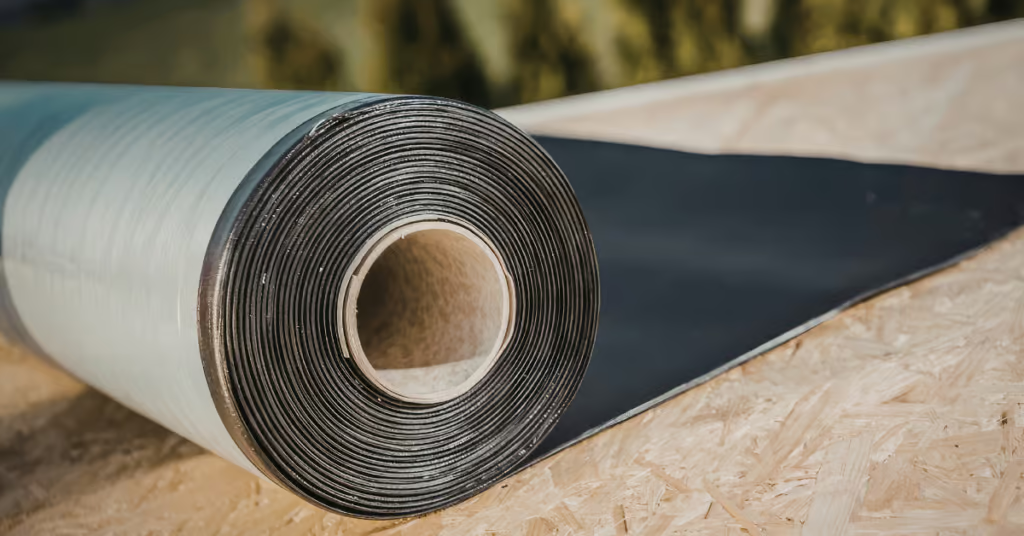
When it comes to safeguarding your home or property, the roof is the first line of defence against the elements. In Vancouver’s wet, variable climate, choosing the right roof membrane types is crucial for flat and low-slope roofs. Whether you are a homeowner, property manager, or contractor, this knowledge pays off. Knowing the main membrane options and how they perform in this climate is key. It helps you get better durability from your roof. It supports stronger energy efficiency over time. It also gives you more long-term value from your roofing project. You can compare the different types of modern membrane options available in today’s commercial roofing market. You focus on key areas of performance over time. You also look closely at installation and lifecycle costs. You consider how long each membrane is likely to last in real conditions.
Why Roofing Membranes Matter and Their Benefits
Roofing membranes are a critical waterproof layer for your building. They stop water from seeping into the structure. This protection helps preserve the building’s integrity. They also help buffer against daily temperature swings. They act as a shield against rain, snow, and wind-driven moisture, reducing the risk of leaks, rot, and costly repairs. At the same time, a well-chosen membrane can improve energy efficiency by supporting consistent indoor temperatures and lowering heating and cooling demands. These benefits apply across many roofing systems in use today. They are relevant for homes and standalone houses. They also matter for strata buildings and shared complexes. Commercial roofing properties gain these advantages as well. They depend on choosing the right roofing underlayment. They also rely on selecting a suitable surface roofing material for the assembly. When choosing between older traditional roofing felts and more modern single‑ply options, understanding how the whole system performs together is essential.
Climate Considerations and Weather Conditions
Vancouver’s damp, rainy conditions demand membranes with excellent water resistance and reliable seam performance. Frequent precipitation, high humidity, and seasonal freeze–thaw cycles mean the membrane must tolerate standing water, expansion and contraction, and potential ice formation. Coastal winds and intermittent summer sun also make wind uplift resistance and UV stability important selection criteria. In short, local weather and the risk of condensation should be a key driver in your membrane choice, not an afterthought.
Different Types of Roof Membranes for Flat Roofs and Key Areas of Performance
Flat and low-slope roofs present unique challenges, so different membrane types exist to match budgets, performance expectations, and sustainability goals. The most common systems include EPDM, TPO, PVC, modified bitumen, and built‑up roofing (BUR). These are all flat roofing systems that fall under broader membrane roofing systems designed to keep water out over large, low‑slope areas. Within these systems, you will also see a range of insulation options, protective surfacing, and compatible installation methods that together determine how the roof performs over time.
EPDM Membrane Roofs as a Single‑Ply Roofing Underlayment Option
EPDM (ethylene propylene diene monomer) is a synthetic rubber membrane valued for its flexibility, UV resistance, and long service life. Its ability to stretch and move with the structure helps prevent cracking and premature failure. In many cases, EPDM formulations are compared with related materials such as ethylene propylene diene terpolymer when designers evaluate long-term performance. EPDM is typically available in large sheets and in black or white, allowing some flexibility in appearance and energy performance. For many property owners, its combination of durability, relatively low maintenance, and recyclability makes it an appealing long-term option. Among roof membrane types, EPDM roofs are a common choice. They suit projects where simplicity is a top priority. They also offer a long track record of proven performance. This appeals to owners comparing flat roof material options.
Professional installation is recommended to optimise seams, detailing, and drainage around penetrations and parapets. Proper slope and drainage design help avoid ponding water, which is especially important in Vancouver’s rainy climate and other extreme weather conditions. A knowledgeable contractor or roofer will follow best-practice installation methods so that every seam, flashing, and transition is sealed correctly.
TPO Membranes as a Thermoplastic Option
TPO (thermoplastic polyolefin) membranes are popular for their energy-efficient, reflective surfaces and competitive installed cost. Their light-coloured finish helps reduce heat absorption and cooling loads, while heat‑welded seams create a strong, continuous waterproof barrier. TPO is also resistant to UV and many chemicals, making it a good fit for modern commercial and multi‑family buildings. As part of today’s commercial roofing options, TPO sits alongside other thermoplastic membranes that prioritise efficiency and weldable seams. In many cases, tpo roofing is chosen for projects where owners want a balance of durability, energy performance, and a clean, modern appearance.
Because performance depends heavily on weld quality and detailing, TPO should be installed by experienced crews. Regular inspections help maintain reflectivity and address any mechanical damage early.
PVC Roofing Membranes and Other Thermoplastic Choices
PVC membranes offer excellent durability, chemical resistance, and weldable seams, which makes them suitable for roofs exposed to pollutants, restaurant exhausts, or industrial environments. Their flexibility allows them to conform to complex roof geometries, and many PVC products are available in reflective, energy-efficient colours. Low routine maintenance needs and inherent fire resistance are additional benefits for both residential and commercial applications. As a thermoplastic membrane, PVC is a well-known roofing option. It uses polyvinyl chloride as the main base material. Many PVC systems also use compatible plastics in their parts. These can include materials such as polyethylene in accessory components.
As with other single‑ply systems, correct attachment, flashing, and detailing are essential to achieve the full service life for these membrane roofing systems.
Bitumen and Built‑Up Roofing (BUR) and Modified Bitumen Asphalt Systems
Modified bitumen and BUR systems are multi‑layer asphalt-based membranes that provide robust, time‑tested protection for flat and low‑slope roofs. Multiple plies of bitumen and reinforcement create a thick, resilient surface that performs well under foot traffic and mechanical wear. These systems are especially valued for their resistance to standing water and their long track record in harsh climates. Among the many asphalt options, bitumen membranes remain a popular choice. They suit owners who prefer a more traditional look and feel. These systems use modern reinforcement to boost performance. They can include advanced modifiers such as atactic polypropylene. These additives improve flexibility in changing temperatures. They also enhance resistance to harsh weather over time.
However, they are more labour‑intensive to install and can be heavier than single‑ply membranes, so structural capacity and budget must be considered. Ongoing maintenance—such as monitoring for surface cracking, blisters, or degraded flashing—helps extend service life for these multi‑ply roofing systems. Installers must also manage any uncured elastomers or asphalt components carefully during application so the finished membrane achieves its intended performance.
Single‑Ply vs Multi‑Ply Systems
Single‑ply systems (EPDM, TPO, PVC) use one primary membrane layer and are typically lighter, faster to install, and often more cost-effective upfront. They are well‑suited to many flat roofs, especially where energy efficiency, reflective surfaces, or reduced structural loading are priorities. Within single-ply options, you will see both rubber and thermoplastic membranes. Each type suits different building and project needs. Rubber roofing is useful where high flexibility is important. It also performs well where impact resistance is a key priority.
Multi-ply systems like BUR and modified bitumen use two or more layers. This builds extra thickness and redundancy into the roof. The result is stronger puncture resistance and higher durability. They work especially well on roofs with heavy foot traffic. They also excel on roofs with harsh weather exposure. They often involve more complex installation and higher labour costs but can provide long-term reliability when properly designed and maintained.
The best choice depends on climate, budget, expected foot traffic, and whether energy efficiency or heavy-duty durability is your top priority. Comparing different roof membrane options with a professional helps you decide with confidence. The professional explains materials that best suit your project needs. They also review attachment methods that work well for your roof. They show how the system ties into vapour control layers. They explain how it will work with the insulation you choose.
Breathable Roofing Membranes
Breathable or “breather” membranes are vapour-permeable yet water-resistant layers used primarily in pitched roof assemblies and some wall systems. They allow internal moisture vapour to escape while blocking wind-driven rain, helping to prevent condensation, mould, and timber decay. In a damp climate, they support healthier, longer‑lasting roof structures when used correctly in the overall roof build‑up. A well-specified breathable membrane works alongside insulation and ventilation to manage moisture safely.
Flat roof membranes are usually waterproof, not vapour open. Roof breathability is handled by the full roof build-up. This includes vapour barriers, the type of insulation, and ventilation. It is not handled by the main waterproof membrane alone, even in advanced ply roofing membrane systems. In these assemblies, each membrane materials and insulation layer works together. The full system manages heat and moisture as one unit. It helps control temperature through the roof build-up. It also limits how much water vapour moves into the roof space. This reduces the risk of trapped moisture condensing inside the roof.
Choosing the Right Roof Membrane
Selecting the right membrane starts with an honest assessment of your roof and priorities:
- Climate: Heavy rain, high humidity, freeze–thaw cycles, and coastal winds all favour robust waterproofing, strong seams, and proven performance in wet climates.
- Budget and lifecycle: Balance upfront cost against expected lifespan, maintenance requirements, and potential energy savings over time.
- Building design: Roof slope, drainage layout, structural capacity, foot traffic, and any mechanical equipment on the roof can all influence which system is most appropriate.
- Sustainability: Reflective, recyclable, or longer‑lasting membranes can reduce environmental impact over the roof’s life.
Consulting a qualified roofing professional like Vantage Roofing Ltd. familiar with Vancouver’s conditions is the most reliable way to match the membrane type to your building, climate, and budget. They can walk you through various types of flat roofing systems. They explain how each option performs in extreme weather. They may use a step-by-step roofing guide to compare the choices.
Choosing the right roof membrane for a flat or low-slope roof takes real care. It is not just grabbing a product off a shelf. You must match material performance to a harsh coastal climate. You must also align with your building’s design. You must keep your long-term budget in balance. By learning how EPDM, TPO, PVC, modified bitumen, BUR, and breathable parts handle moisture, you make a smarter choice. You also see how each one reacts to temperature swings. You see how well each one stands up to daily wear and tear. With that insight, you can invest in a system that stays reliably waterproof. It can also boost energy efficiency for your building. It will deliver long-lasting durability for many years across multiple roof membrane types, as long as the chosen materials and components are installed and maintained correctly.
If you are not sure which option fits your project, get help from a skilled local contractor. Working with a team like Vantage Roofing Ltd. ensures your roof is designed for Vancouver’s unique conditions. It also ensures it is installed to handle local weather over time. This gives you confidence that your property stays protected season after season with the right membrane roofing systems in place.
