

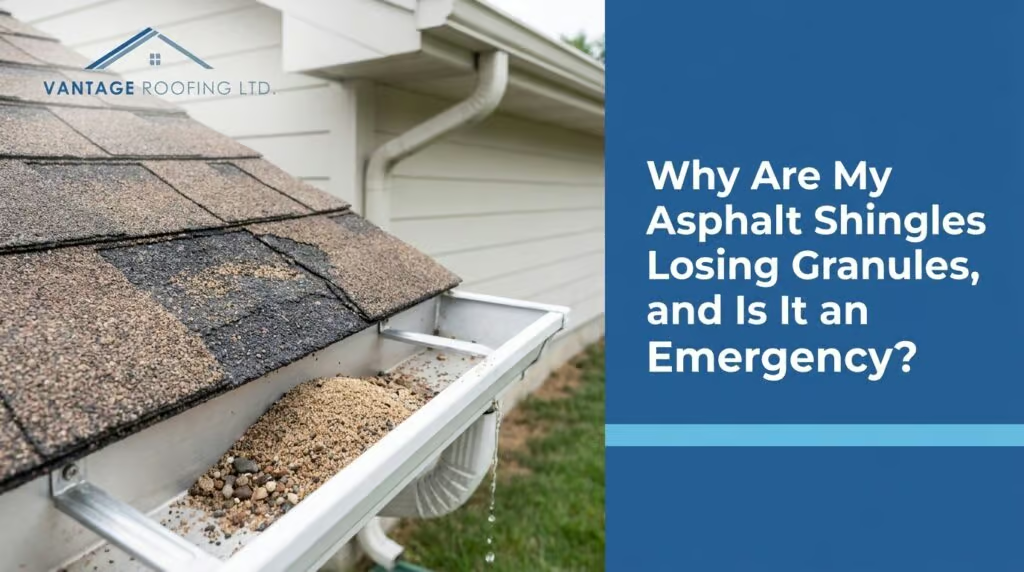
Finding a pile of coarse, sand-like particles at the bottom of your downspouts can be alarming for any homeowner. Those tiny stones are the protective granules on your roof, and their sudden appearance in your gutters often signals a shift in the condition of your weatherproofing. While a small amount of shedding is a natural part of a roofing system’s lifecycle, excessive loss leaves the underlying material completely exposed to harsh elements, accelerating deterioration and increasing the risk of water intrusion.
We frequently inspect properties where homeowners ask us, why are my asphalt shingles losing granules, and is it an emergency? The answer depends on the age of the materials, recent weather events, and the extent of the bald spots left behind. Understanding the difference between normal wear and active failure is the first step in protecting your property from structural damage.
What Are Asphalt Shingle Granules and Why Are They Important?
Asphalt shingles are constructed in layers, starting with a fiberglass mat coated in asphalt. The topmost layer consists of crushed minerals, known as granules, embedded tightly into the surface. These granules are not just for aesthetic color; they serve as the primary armor for your roofing system.
They reflect destructive ultraviolet rays that would otherwise bake and blister the asphalt. Furthermore, the mineral coating provides essential fire resistance and creates a durable, weatherproof barrier that helps shed rain and snow efficiently. Without this protective shield, the asphalt layer quickly dries out, becomes brittle, and loses its ability to keep moisture out of your home.

Is Shingle Granule Loss a Roofing Emergency?
When homeowners notice shedding, their immediate concern is whether they need urgent assistance. In most cases, discovering granules in your gutters is not an immediate roofing emergency in the same way that an active leak or a collapsed structure would be. It is typically a sign of gradual, long-term deterioration rather than an overnight crisis.
However, just because it does not require a midnight repair call does not mean it should be ignored. If the shedding has reached the point where the underlying asphalt is exposed, the clock is ticking on the shingle’s lifespan. We recommend addressing widespread depletion promptly to prevent it from escalating into a true emergency, such as water breaching the underlayment and damaging your attic or ceiling.
Normal Granule Shedding vs. Premature Failure
Not all granule loss indicates a failing roof. During the manufacturing process, extra granules are pressed into the shingles, and many of these do not fully embed into the asphalt. If you have a brand-new roof, it is completely normal to see a wash of these loose, excess granules in your gutters after the first few rainstorms. This initial shedding does not affect the performance or longevity of the materials.
Conversely, premature failure occurs when a roof that is only a few years old begins shedding heavily, creating visible bald patches. This abnormal deterioration can stem from manufacturing defects, improper installation, or extreme environmental stress. Over our decades of combined experience, our team has evaluated countless roofs to distinguish between harmless new-roof shedding and critical system failure.
Because age drives granule loss, know the typical shingle lifespan in our climate and how maintenance affects it.
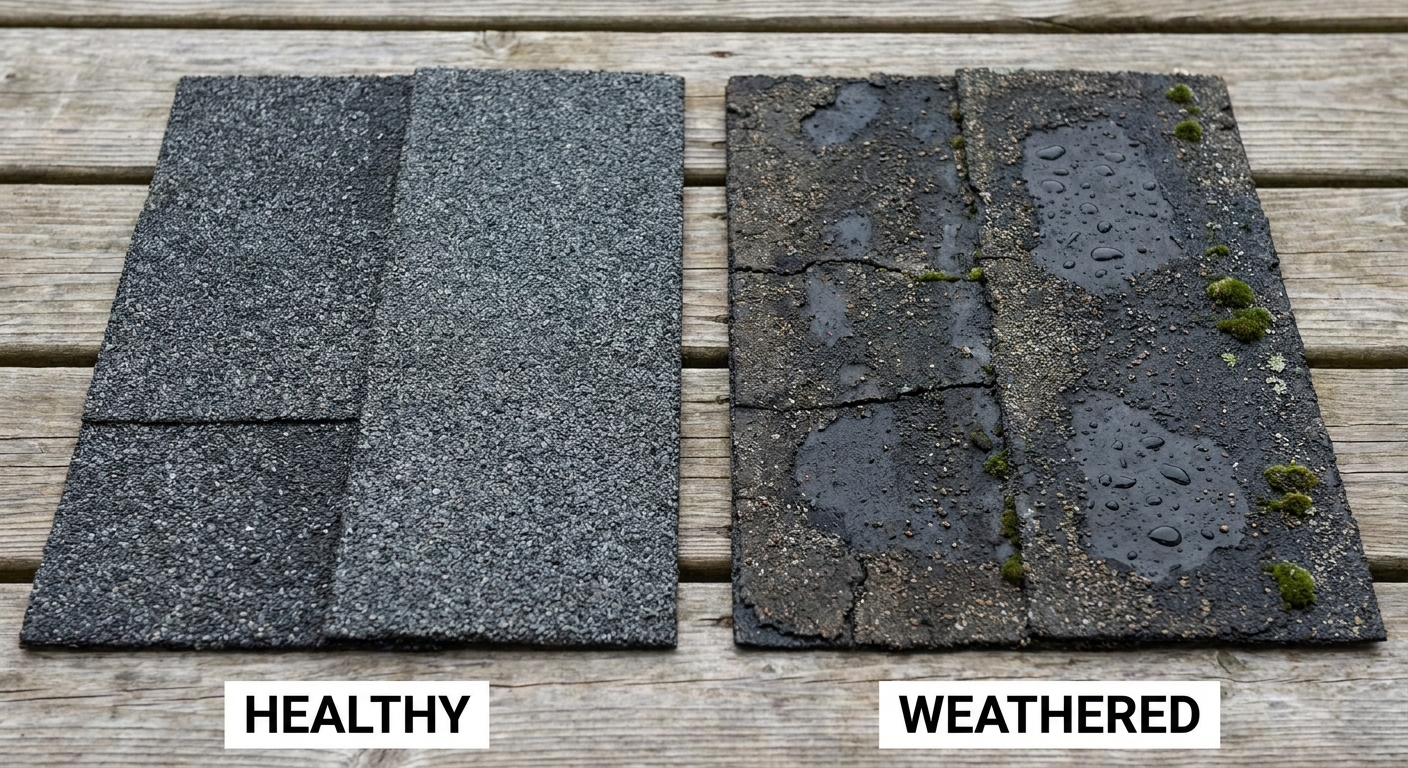
Common Causes of Granule Loss on Asphalt Roofs
How Heavy Rain and Wind Accelerate Shingle Deterioration
While asphalt shingles are designed to withstand the elements, severe weather takes a cumulative toll. Heavy, driving rain can wash away granules that have been loosened over time. When paired with high winds that lift shingle edges, the physical battering knocks more of the mineral surface loose. Hail impacts are particularly destructive, as they forcefully dislodge clusters of granules, leaving concentrated bruises of exposed asphalt that age at a highly accelerated rate.
The Impact of Aging, Poor Attic Ventilation, and Foot Traffic
As a roof approaches the end of its intended lifespan, the chemical bond holding the granules to the asphalt naturally breaks down. This aging process is inevitable, but it can be severely accelerated by poor attic ventilation. When heat is trapped beneath the roof deck, it effectively bakes the shingles from the inside out, causing the asphalt to oxidize and release its grip on the mineral coating.
Additionally, excessive foot traffic can scrape the protective layer away. Walking on the roof, especially on hot days when the asphalt is soft, scuffs the shingles and dislodges the granules. This is why our operations team relies on drone technology for our initial roof assessments, allowing us to safely and thoroughly inspect your property without causing unnecessary wear.
To slow storm wear between inspections, protect your roof in Vancouver rain with simple upkeep.
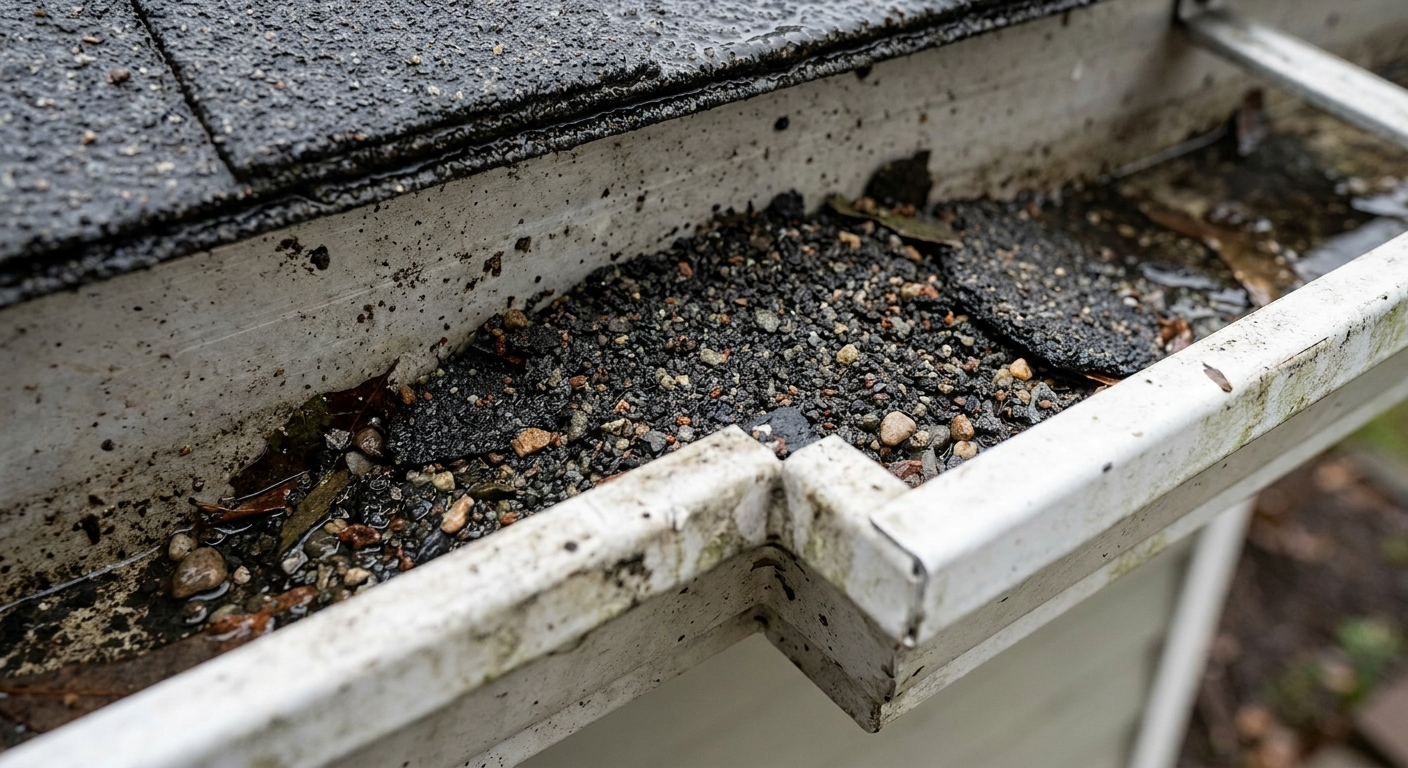
The Stages of Granule Loss: From Minor Shedding to Exposed Fiberglass
Granule depletion happens in stages, and recognizing these phases can help you gauge the severity of your roof’s condition.
- Stage 1: Minor Accumulation. Light shedding, especially after a storm or on a newly installed roof, results in a small dusting of granules in your gutters. The shingles still look uniform and textured from the ground.
- Stage 2: Exposed Asphalt. As the bond weakens, larger sections of minerals wash away. You will begin to notice shiny, reflective patches on the roof where the black asphalt is directly exposed to the sun. The shingles may start to look patchy or discolored.
- Stage 3: Bare Fiberglass Mat. In the most advanced stage of deterioration, the asphalt itself wears away, revealing the shiny, woven fiberglass mat underneath. At this point, the shingle has lost all of its structural integrity and weatherproofing capabilities, making water intrusion inevitable.
Safe Ways to Spot Granule Loss Without Climbing Your Roof
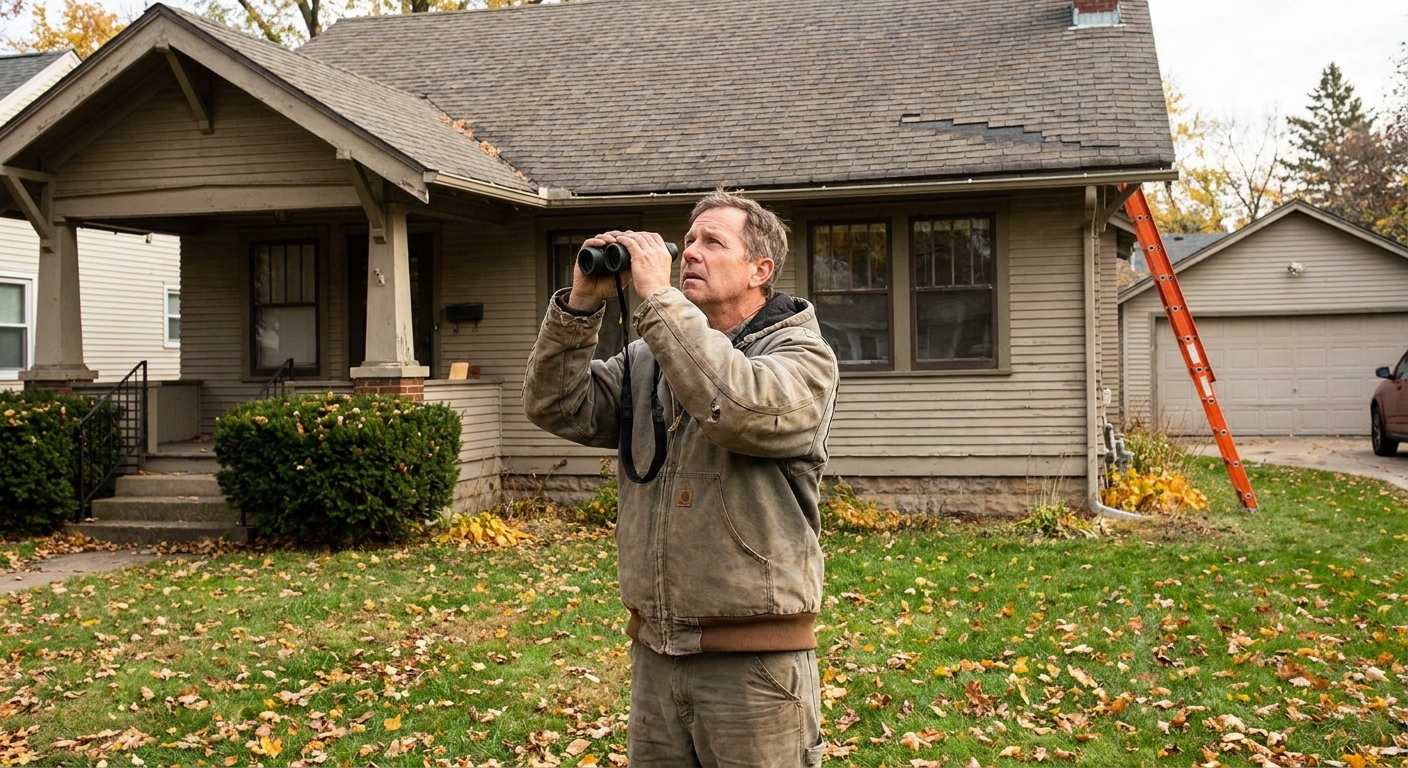
We strongly advise against climbing onto your roof to check for damage. Not only is it a safety hazard, but walking on weakened materials can worsen the problem. Fortunately, you can spot the warning signs safely from the ground.
Start by examining your downspouts and the splash blocks at their base. A heavy, dark accumulation of sand-like material is a clear indicator of shedding. Next, step back into your yard and look up at the roof surface during different times of the day. Watch for smooth, shiny spots that reflect sunlight, as well as uneven, dark patches that interrupt the uniform color of the shingles. If you notice these visual cues, it is time to have a professional document the condition using proper equipment.
There’s a reason we advise staying off the shingles—our explanation of foot-traffic roof damage shows what walking does and safer ways to check.
The Risks of Ignoring Severe Granule Depletion
Choosing to ignore bald shingles leaves your home vulnerable to a cascading series of structural issues. Without the UV-blocking minerals, the exposed asphalt bakes in the sun, causing the shingles to curl, warp, and become incredibly brittle. Once they lose their flexibility, they are prone to snapping off entirely during high winds.
As the physical structure of the shingle breaks down, its ability to shed water is compromised. Rainwater will eventually seep through the micro-cracks in the dried-out asphalt, bypassing the underlayment and soaking into the wooden roof deck. By the time you notice a water stain on your living room ceiling, the trapped moisture may have already caused extensive wood rot and mold growth in the attic.
When to Schedule a Professional Roof Inspection
If your roof is approaching the fifteen to twenty-year mark, or if you have recently noticed heavy granule buildup in your yard following a severe storm, it is time to schedule a professional assessment. Catching the early stages of surface failure allows you to plan ahead before a minor issue turns into a major interior leak.
At Vantage Roofing Ltd., we take the uncertainty out of the process. Our approach begins with a comprehensive drone roof inspection to provide a transparent, written assessment of your property’s condition. As certified contractors with major brands like Malarkey, IKO, CertainTeed, and Soprema, we ensure that every replacement is backed by robust manufacturer warranties and our own workmanship guarantee—meaning if an issue arises, we return within twenty-four hours to address it.
We protect your property throughout the entire process, using dump trailers and groundsheets to safeguard your landscaping, and leaving your yard completely free of stray nails through our rigorous sweeping and magnetic yard checks. When you are ready for clear communication and a dedicated project manager who stands behind the work, reach out to our team to secure your home’s defense against the elements.
When an inspection turns up major wear, this clear line between repair and replacement will help you choose your next step.
Areas We Serve
Granule loss doesn’t look the same everywhere—age, storms and sun all play a part where you live. Our area hubs outline our roofing work locally and link to nearby teams and services, helping you focus on the right next step close to home.
- Burnaby Roofers & Roofing Contractors
- Coquitlam Roofers & Roofing Contractors
- Delta Roofers & Roofing Contractors
- Ladner Roofers & Roofing Contractors
- Langley Roofers & Roofing Contractors
- Maple Ridge Roofers & Roofing Contractors
- New Westminster Roofers & Roofing Contractors
- North Vancouver Roofers & Roofing Contractors
- Pitt Meadows Roofers & Roofing Contractors
- Port Coquitlam Roofers & Roofing Contractors
- Port Moody Roofers & Roofing Contractors
- Richmond Roofers & Roofing Contractors
- Surrey Roofers & Roofing Contractors
- Vancouver Roofers & Roofing Contractors
- West Vancouver Roofers & Roofing Contractors
- White Rock Roofers & Roofing Contractors